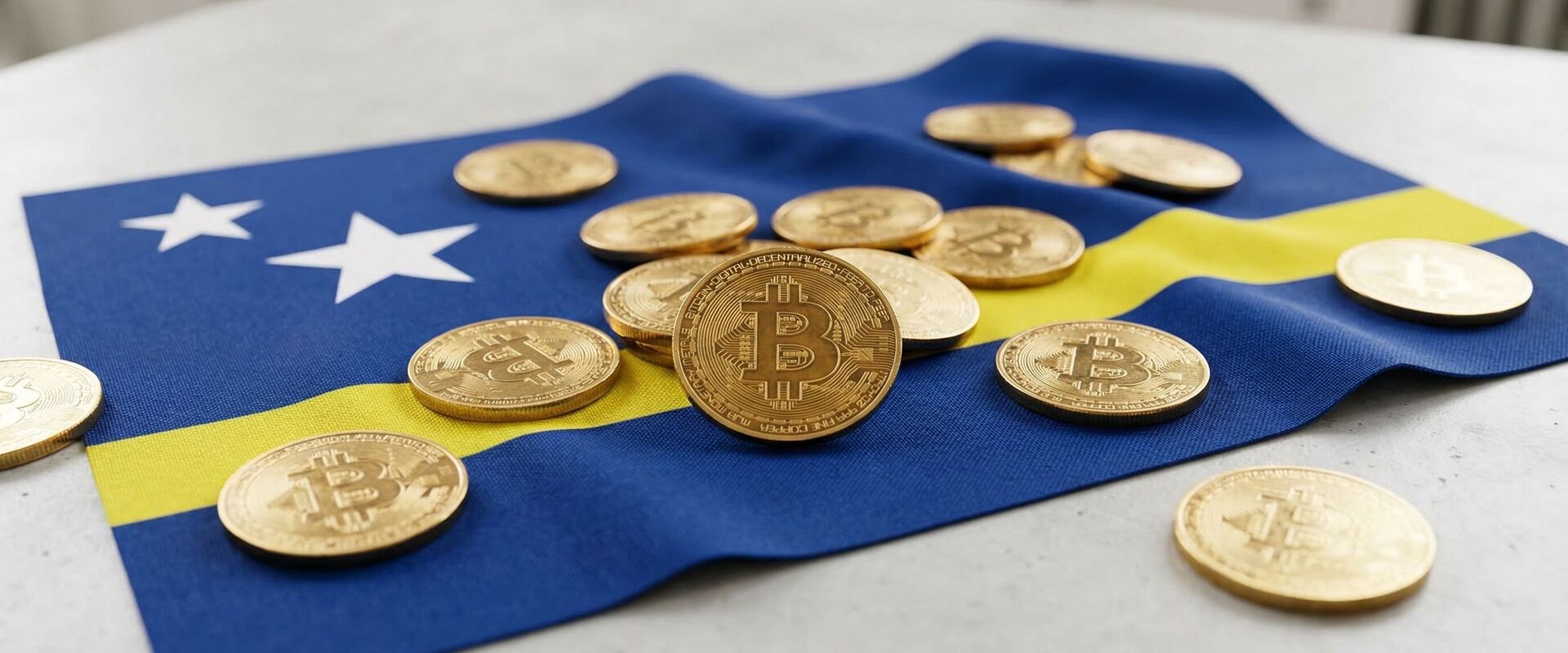


iGaming License in Curaçao

iGaming License in Curaçao 2026: A Step-by-Step Guide Under the New LOK Regime

The 2024 Landsverordening op de Kansspelen (LOK) replaced the master/sub-licence system with direct CGA-issued B2C and B2B licences. This guide walks you through the new fee schedule, substance and onshoring rules, and the realistic timeline to a live Curaçao licence in 2026.

Fintech Simple has run 500+ licensing projects since 2016, with Curaçao a core practice through every iteration of its regime — from legacy NOOGH to today's direct CGA licensing under LOK. We handle it end-to-end: licence selection (B2C, B2B or B2B Certificate), N.V./B.V. incorporation, LOK application and the CGA two-phase review, plus AML, responsible-gaming, ADR and Tier-IV hosting. Tell us your stack on a call — we'll say whether Curaçao fits and what year one costs.

Patrik Asevicius — Curaçao iGaming licensing expert at Fintech Simple
Head of Licensing Department, Curaçao & offshore iGaming

iGaming License in Curaçao: A 2026 Overview

Regulator

Curaçao Gaming Authority (CGA)

Annual B2C licence fee

€47,450 (Treasury €24,490 + Supervisory €22,960)

Time to provisional licence

~8–12 weeks per phase

Corporate income tax

15% (≤XCG 500k) / 22% (above); E-Zone 2% expired 1 Jan 2026

Curaçao has issued iGaming licences since 1996 and remains one of the few jurisdictions where a single Curacao Gaming License covers casino, sportsbook, poker, and lottery. If you are targeting a global player base on a first-year budget of €40–100k and want to be live within three to four months, Curaçao still competes on price and speed. But the rules changed in late 2024, and operators planning on the old master/sub-licence model will find themselves out of step with what the Curaçao Gaming Authority now requires.

What changed in 2024–25

The Landsverordening op de Kansspelen (LOK) entered into force on 24 December 2024, replacing the 1993 NOOGH framework that had governed offshore online gaming for three decades. The master/sub-licence model is abolished. Every operator now holds a direct B2C licence issued by the Curaçao Gaming Authority (CGA). The sub-licensee phase-out completed on 15 October 2025.

The cost structure changed too. Under LOK, you pay €47,450 per year in statutory B2C licence fees: €24,490 in Treasury Licence Fees and €22,960 in CGA Supervisory Fees, both billed annually. A €4,592 application fee is due at filing, on top of the first-year annual fee.

Substance requirements also took effect. From 1 January 2026, every CGA licensee must have a registered office address in Curaçao, at least one locally resident managing director, and local employees. A virtual mailbox no longer qualifies. That is only the day-one bar; the onshoring requirements step up further through 2027, 2028, and 2029 with additional Key Person residency rules. If you planned around the 2% E-Zone corporate income tax rate, that regime expired on 1 January 2026. The standard rate is now 15% on profits up to XCG 500,000 and 22% above that.

Who Curaçao suits in 2026

An iGaming license in Curacao fits early-stage operators who want one licence covering every vertical (casino, sportsbook, poker, lottery) without piecing together multiple approvals. It works for crypto-tolerant operations: there is no in-principle bar on crypto deposits or withdrawals, and the CGA has built crypto handling requirements directly into its new Terms & Conditions framework. Realistic first-year all-in spend sits in the €40–100k range depending on your corporate structure, due-diligence headcount, and how many domains you register.

Curaçao is the wrong choice if your investors or payment processors require an EU-passportable licence, since it has no EU equivalence or passporting rights. It is also not the right starting point if your target markets are Tier-1 regulated territories (Germany, France, the Netherlands) that require local licences regardless. And if your team cannot establish genuine local substance in Curaçao from the outset, the 2026 rules mean compliance exposure from day one.

Service Packages and Pricing

Three tiers covering LOK application filing through post-licence onshoring planning. Government fees (application €4,592, annual B2C licence €47,450, due-diligence, domains, per-game) are billed at cost and not included. Every tier includes Curaçao N.V./B.V. incorporation, LOK application pack drafting, CGA portal filing, Phase 1 CGA review support, and resident managing director onboarding.

Essential package €27,500
Full package €34,500
Extended package €39,500
Full legal analysis of your project
Company formation in Curaçao
Preparation of necessary documentation
Assistance in license application
Corporate account opening
Procedural documentation preparation
AML/KYC policies
Essential package €27,500
  • Full legal analysis of your project
  • Company formation in Curaçao
  • Preparation of necessary documentation
  • Assistance in license application
  • Corporate account opening
  • Procedural documentation preparation
  • AML/KYC policies
Full package €34,500
  • Full legal analysis of your project
  • Company formation in Curaçao
  • Preparation of necessary documentation
  • Assistance in license application
  • Corporate account opening
  • Procedural documentation preparation
  • AML/KYC policies
Extended package €39,500
  • Full legal analysis of your project
  • Company formation in Curaçao
  • Preparation of necessary documentation
  • Assistance in license application
  • Corporate account opening
  • Procedural documentation preparation
  • AML/KYC policies

Government fees charged at cost; see the fee schedule above.

Our Experts

500+ licence approvals since 2016 across 40+ jurisdictions, including every iteration of the Curaçao regime: legacy NOOGH master licences, sub-licences, and direct CGA-issued B2C and B2B licences under LOK. We file, defend and operate Curaçao iGaming licences end-to-end.

Patrik Asevičius
Patrik Asevičius Lawyer, Head of Licensing
Ilya Nikiforov
Ilya Nikiforov International Corporate Law Attorney
Anastassia Rumjantseva
Anastassia Rumjantseva Lawyer

Regulatory Framework: From NOOGH to LOK

Curaçao has licensed online gambling longer than almost any other jurisdiction. The 1993 offshore ordinance evolved through a 2023 transition period and the December 2024 Landsverordening op de Kansspelen (LOK Curacao), which replaced the master–sub model with direct B2C and B2B licences issued by the Curaçao Gaming Authority (CGA).

The 1993 NOOGH era and master licences

The NOOGH (National Ordinance on Offshore Games of Hazard) was enacted in 1993, making Curaçao one of the world’s first jurisdictions to create a legal framework for online gambling. The first licences were issued in 1996, and for nearly three decades the system ran on a master–sublicence model: four master licence holders could each sell sublicences to hundreds of online operators, acting as the regulatory interface between the government and individual operators.

Key milestones during the NOOGH era:

  • 1993: NOOGH enacted; offshore gaming gets a legal home in Curaçao.
  • 1996: first iGaming licences issued under the new ordinance.
  • February 2019: the Gaming Control Board (GCB) was appointed AML/CFT supervisor; this did not make the GCB the licensing regulator, and the master licence model stayed in place.
  • July 2023: the Ministry of Finance publicly disclosed the new direct-licensing regime that would replace NOOGH.
  • 15 November 2023: the direct (standalone) NOOGH licence application window opened; operators could apply in their own name for the first time, via a dedicated CGA portal.
  • 31 January 2025: the last NOOGH master licence expired, formally ending the master–sub era.

The 2024 LOK reform

The Landsverordening op de Kansspelen entered into force on 24 December 2024 (not April 2024, as some earlier sources reported). Applications submitted before that date were processed under NOOGH rules; applications filed on or after 24 December 2024 fall under LOK.

The LOK replaces the single-master-licence structure with two distinct licence categories:

  • B2C operator licence: authorises a company to offer games of chance directly to end players. The CGA reopened the B2C portal in mid-March 2025.
  • B2B supplier licence / certificate: covers providers of critical gaming services, software, and infrastructure to operators. The B2B portal opened in May–June 2025, subject to accreditation of testing laboratories.

Key distinction

Under the old NOOGH model, a master licence holder could both supply technology and run player-facing operations under one umbrella, the so-called B2C2B structure. LOK abolishes this. An entity cannot hold a combined B2C and B2B licence without explicit CGA authorisation. If your business both operates a casino and supplies gaming software to third parties, you need separate licences or a specific approval from the CGA.

The sublicensee transition ended on 15 October 2025, by which point all former sublicensees were required to hold a direct CGA licence. A six-month extension to 24 December 2025 was granted to a select group of NOOGH-pipeline operators who had not yet completed their conversion.

The Curaçao Gaming Authority (CGA)

The Curaçao Gaming Authority (CGA) is the licence-issuing regulator under LOK. It succeeded the Curaçao Gaming Control Board (CGCB/GCB), which had functioned mainly as an AML/CFT supervisor. The CGA evaluates applications, issues licences, conducts ongoing supervision, and can suspend or revoke a licence for non-compliance.

Applications are filed through the CGA applicant portal. The fit-and-proper assessment has three parts: ownership and control, the operator’s capacity to prevent crime and protect players, and the stability and security of the platform. Once approved, you enter a provisional licence phase valid for six months, extendable by another six months, before converting to a full licence.

Licence Types and Eligibility Requirements

The LOK created two direct CGA licences: the B2C operator licence for player-facing operators and the B2B supplier licence (or the lighter-touch B2B Certificate) for technology and software providers. Fees, scopes, and obligations differ between the two tracks.

B2C operator licence

The B2C licence authorises any business offering games of chance directly to players. One licence covers all gaming verticals: casino, sportsbook, poker, lottery, daily fantasy sports, and esports wagering. It is product-agnostic provided each game is individually certified.

The statutory annual fee is €47,450, split into two components billed by different authorities:

  • Treasury Licence Fee: €24,490, payable to the Curaçao Treasury
  • CGA Supervisory Fee: €22,960, payable directly to the CGA

Invoices are due within 14 days of issuance. Failure to settle within 71 days triggers formal revocation and removal from the CGA public register. From 2026 onwards, annual fees are payable in full by 15 January each year.

The B2C licence is issued for an indefinite term, subject to continued payment of annual fees, ongoing compliance, and periodic CGA review.

B2B supplier licence and B2B Certificate (€383, 3 years)

Businesses that supply critical gaming services to B2C operators (software platforms, RNG engines, game content, or managed gaming services) must hold a B2B supplier licence. The annual CGA Supervisory Fee is €24,490. The licence is indefinite in term, renewed through annual fee payment.

For vendors whose activities are non-critical or narrowly scoped (payment processing partners, minor ancillary services), the CGA offers the B2B Certificate: a one-off fee of €383 valid for three years with no annual renewal charge. The Certificate is not a full licence and limits the holder to the specific activities the CGA authorises under it.

B2C and B2B cannot be stacked

A company cannot hold a B2C operator licence and a B2B supplier licence under a single authorisation unless the CGA grants explicit combined approval. Operators planning to supply platform services to third-party licensees while also running their own player-facing products must structure this through separate legal entities or obtain specific CGA sign-off before going live.

Licence type Annual fee Term What it covers Best for
B2C operator licence €47,450 Indefinite (subject to annual fees) All gaming verticals: casino, sportsbook, poker, lottery, fantasy Player-facing operators
B2B supplier licence €24,490 Indefinite Software, platforms, RNG, game suppliers Critical-service B2B providers
B2B Certificate €383 (one-off, 3 years) 3 years Narrow / non-critical B2B activities Service vendors, small B2B providers

Corporate entity and Key Persons

Every applicant must hold a valid Curaçao N.V. or B.V. (local limited-liability company). From 2025 onwards, the entity must have at least one Curaçao-resident managing director, a natural person physically resident on the island and separate from the broader Key Person headcount.

All individuals who own, control, or manage the licensed business are assessed as Key Persons. The CGA applies a three-part fit-and-proper test to every Key Person and to every ultimate beneficial owner (UBO) holding 10% or more of equity:

  • Ownership and control: who owns and controls the business
  • Crime prevention and player protection: adequacy of AML, KYC, responsible gambling, and complaint-handling systems
  • Platform stability and governance: security and resilience of the platform, operations, and critical third-party dependencies

Each Key Person and qualifying UBO must submit a Personal Disclosure Form package. The standard document checklist includes:

  • Utility bill: issued within the last 3 months (proof of residential address)
  • Passport: valid for at least 6 months from the date of submission
  • Curriculum vitae: full professional history
  • Certificate of good conduct: police clearance from all countries of residence in the last 5 years
  • Bank reference letter: from the applicant’s principal banking institution
  • Professional reference letter: from a solicitor, accountant, or regulated professional
  • Secondary photo ID: national identity card or driver’s licence
  • Source-of-funds evidence: documentation tracing the origin of capital invested in the business
  • Birth certificate: may be required at the CGA’s discretion

The CGA verifies the exact source of wealth for every qualifying UBO and expects a three-year financial forecast and bank statements demonstrating sufficient liquidity to cover potential player claims.

Substance, server location and game certification

The LOK substance obligation took effect on 1 January 2026. All CGA licensees must maintain real operational presence in Curaçao from day one of licensing: a registered office address (not a virtual office), at least one Curaçao-resident managing director, and local employees.

1 January 2026: substance obligation already in force

If you are applying for a new CGA licence, local substance is a day-one requirement, not a future milestone. Budget for a physical office lease and at least one locally employed staff member before submitting your application. Further Key Person residency requirements phase in on 1 April 2027, April 2028, and April 2029.

Server location. All player data must be hosted in a Tier IV certified data centre physically located in Curaçao, accessible to the CGA on demand. Article 5.9 of the LOK Regulation requires that critical player data (IDs, account records, deposits, bets, wins and losses, balances) be retained for at least three years, with weekly backups and end-to-end encryption. A secondary in-jurisdiction backup is mandatory. Any deletion or material change to stored data requires CGA approval.

RNG and game certification. Every game offered to players must be certified by an accredited independent testing laboratory before it goes live. The CGA recognises GLI, iTech Labs, and eCOGRA as approved labs. For online RNG-based games, GLI-19 is the recognised technical standard. Operators can verify a game supplier’s certification status directly on the GLI-19 certificate index. Each new game title added to the platform also carries a €13 administrative fee payable to the CGA at the time of registration.

Government Fees and First-Year Budget

The Curacao gaming licence fees under the LOK framework replaced several legacy flat-rate arrangements with per-unit charges. The CGA updated its fee policy in November 2025, fixing statutory amounts in both euros and Antillean guilders (ANG). The annual licence cost is not the Treasury component alone, which several competitor guides still cite as the full figure.

LOK statutory fee schedule (CGA, Nov 2025 update)

Every figure below is drawn from the CGA Nov 2025 fee policy update. The annual B2C licence fee of €47,450 is the sum of two statutory charges: a Treasury Licence Fee of €24,490 paid to the Curaçao government and a CGA Supervisory Fee of €22,960 paid to the regulator. Many sources cite only the Treasury component, the figure that appears in ANG 48,000 conversion tables, and present it as the full annual cost.

Item EUR ANG USD*
Application fee (B2C / B2B) €4,592 ANG 9,000 $4,913
Annual B2C operator licence (total)
  → €24,490 Treasury Licence Fee
  → €22,960 CGA Supervisory Fee
€47,450 ANG 92,500 $50,772
Annual B2B supplier licence €24,490 ANG 48,000 $26,204
B2B Certificate (one-off, 3 years) €383 ANG 750 $410
Per added domain (admin fee) €250 ANG 490 $268
Per added game / B2B service €13 ANG 25 $14
UBO / QIH change fee €128 ANG 250 $137
Due-diligence per person (role-scaled) €150–€2,551 ANG 295–5,000 $161–$2,730

*USD figures use illustrative EUR × 1.07; check live FX before budgeting. Source: CGA Nov 2025 fee policy update.

Outdated fee framing to avoid

The older “unlimited domains for ANG 500 per year” framing is outdated and has been replaced under the CGA November 2025 fee policy. Every domain added to a licence now carries a discrete €250 per-domain administrative fee. If you plan to operate across multiple brands or white-label skins, factor each domain individually into your budget.

Due-diligence, domain and per-game admin fees

The due-diligence charge is the most variable line in an application budget because it scales with both the number of Key Persons and UBOs and their specific role in the corporate structure. The CGA applies a role-based tariff: a passive minority shareholder may pay as little as €150, while the highest application-listing categories (typically the operating director or the entity's primary controller) attract up to €2,551 per person. An operator with three to five Key Persons or UBOs should budget €1,500–€10,000 for due-diligence fees alone.

The UBO / Qualified-Interest-Holder (QIH) change fee of €128 applies whenever ownership or control shifts post-licensing. This is a regulatory notification charge, not a full re-screening, but any restructuring that changes who sits above the 10% equity threshold triggers it, and the CGA investigates each change.

On the operational side, each additional domain costs €250 as a discrete admin fee. Operators running multiple brands or country-specific skins should cost these individually; five domains adds €1,250 to the annual outlay. Adding games or B2B services carries a smaller per-unit fee of €13 each.

Realistic first-year budget breakdown

The statutory fees are only part of the picture. Corporate formation, local substance, hosting compliance, and professional services all stack on top. The table below models a realistic first-year total cost for a B2C operator entering under LOK, excluding the ongoing annual renewal from year two onwards.

Item Estimated cost (EUR)
Application fee €4,592
Annual B2C licence fee (Treasury + Supervisory) €47,450
Curaçao N.V./B.V. incorporation + resident MD €5,000–€10,000
Due-diligence fees (3–5 Key Persons / UBOs) €1,500–€10,000
Tier-IV hosting (annual) €6,000–€15,000
Domain registrations €250 each
AML/KYC, RG, ADR, T&Cs policy build €5,000–€12,000
Legal & licensing advisory (our fees) from request
Total realistic first-year range €40,000–€100,000+

The wide range reflects genuine variability: a lean operation with two UBOs, one domain, and outsourced compliance can land near €40k; a multi-brand launch with five Key Persons, multiple domains, and bespoke AML infrastructure will push well above €100k. From year two, the statutory renewal cost is the annual B2C licence fee of €47,450; the application fee and incorporation costs do not recur.

Payment terms: 14-day invoice / 71-day revocation

The CGA invoices licensees on a fixed cycle. Each invoice is due within 14 days of issuance. This is a hard deadline, not a grace period; operators must have cleared funds or a payment process in place before the invoice arrives. Failure to pay within 71 days of the invoice date triggers formal licence revocation and removal from the public CGA register.

Late payments revoke the licence at day 71

Day 71 is a formal revocation, not a suspension. Your name is removed from the public register and your operation becomes unlicensed; reinstatement requires a new application. Build your treasury management around the 14-day due date, not the 71-day outer limit.

The payment schedule has a transitional structure for new licensees. For the first 12 months after LOK went live on 24 December 2024, approved applicants were billed in two six-month instalments rather than a single annual payment. From 2026 onwards, annual fees are payable in full by 15 January each year. Operators on the split-instalment arrangement should not assume it continues automatically; the full-year invoice is due by 15 January and the 14-day / 71-day rules apply from that date.

Tax Regime and Corporate Substance

Curaçao's tax framework changed on 1 January 2026. The offshore E-Zone privilege that let qualifying companies pay a 2% profit tax (which competitors still cite) expired. New iGaming licensees under the LOK now fall under the standard Curaçao corporate income tax bands, with an OECD Pillar Two overlay for groups above €750M consolidated revenue.

Corporate income tax (and the end of the E-Zone 2% rate)

Curaçao levies corporate income tax (CIT) in two bands: 15% on profits up to XCG 500,000 (roughly €280,000), 22% above that threshold. Most licensees clear XCG 500,000 in their first trading year, so the 22% rate is the practical planning baseline. These rates were confirmed by Grant Thornton Curaçao's 2025 tax law changes bulletin.

The E-Zone 2% profit-tax rate was a separate incentive regime granted to companies with approved E-Zone status. That regime expired on 1 January 2026 and is no longer available to new iGaming licensees. Competitor pages still quoting a “2% effective tax” are out of date. If you already held E-Zone status, reconfirm your position with a local tax adviser; no successor incentive has been announced for the iGaming sector as of May 2026.

Tax Rate Applies to Notes
Corporate income tax 15% Profits ≤ XCG 500,000 Standard regime
Corporate income tax 22% Profits > XCG 500,000 Plan on this for most operators
E-Zone 2% rate n/a Expired 1 Jan 2026 No longer available to new licensees
Pillar Two top-up 15% effective MNEs ≥ €750M consolidated revenue Effective 1 Jan 2025
GGR tax 0% Gross gaming revenue No gaming tax under LOK
Sales tax (OB) 6%–9% Local Curaçao consumers only International iGaming exports exempt
Dividend WHT 0% Outbound dividends to non-residents No dividend WHT under general Curaçao regime

Our recommendation

Model your financial projections on the 22% Curacao corporate income tax rate. Treat any future successor incentive regime as upside, not as a baseline assumption. Structuring around a benefit you have not yet received creates compliance risk.

OECD Pillar Two for in-scope multinationals

If your group has consolidated annual revenue of €750 million or more, Curaçao falls within scope of the OECD Pillar Two global minimum tax framework, effective 1 January 2025. The income inclusion rule (IIR) requires the ultimate parent jurisdiction to levy a top-up charge wherever the effective tax rate in a constituent entity's jurisdiction falls below the 15% global minimum. At Curaçao's 22% CIT rate most large operators already clear the 15% floor, but the calculation is entity-by-entity; substance-based income exclusions, deferred tax positions, and covered tax adjustments all affect the final effective rate. Groups in scope should run a jurisdiction-level GloBE computation before finalising their Curaçao structure.

For iGaming operators below the €750M revenue threshold, Pillar Two does not apply; the standard 15%/22% CIT bands are the only corporate tax exposure to model.

GGR tax, sales tax (OB) and withholding tax

GGR tax: 0%. The LOK does not impose a separate gross gaming revenue tax. This distinguishes Curaçao from Malta (5% GGR) or Gibraltar (tiered GGR levy).

Sales tax (OB), not VAT. Curaçao operates an omzetbelasting (OB) system with tiers of 6%, 7%, and 9%; it is technically distinct from EU-style VAT. For international iGaming operations, player wagers to customers outside Curaçao are effectively exempt from OB: the service is treated as an export. Foreign digital-service providers serving local Curaçao consumers may face a 6% OB collection obligation, but most B2C operators targeting international markets have no material OB liability. Confirm the exact scope with your local tax counsel if you serve any Curaçao-resident traffic.

Withholding tax on dividends: 0%. Curaçao does not levy a dividend withholding tax on outbound distributions to non-resident shareholders under its general corporate tax regime. This was also the position under the now-expired E-Zone regime. Confirm your position with a Curaçao tax adviser before distributing profits, particularly where treaty relief or substance considerations interact with the recipient jurisdiction.

Ongoing Compliance and Reporting Obligations

A CGA licence carries continuous obligations: anti-money-laundering controls, player-protection duties, data governance, and escalating local-presence requirements. Several rules below entered into force or were updated in the past twelve months. Non-compliance triggers suspension, revocation, and removal from the public CGA register.

AML / KYC and the ANG 4,000 trigger

Curaçao AML/KYC rules require operators to identify and verify every player whose cumulative transactions (deposits, withdrawals, and wagers combined) reach ANG 4,000 (approximately €2,050). Once a player crosses the threshold, full KYC documentation must be on file before further play. The Compliance Officer must complete at least 10 hours of AML training per year to remain in role, per the CGA Anti-Money Laundering Policy (January 2025).

Operators must maintain written AML/CFT policies, conduct transaction-monitoring, file suspicious-activity reports with the Financial Intelligence Unit of Curaçao, and keep records sufficient to reconstruct every transaction. Player funds must be segregated from operator working capital at all times; commingling is a material breach.

Excluded markets

Even with a valid CGA licence, operators may not accept players from the United States, Germany, France, Australia, the Netherlands, or Curaçao itself. Germany’s exclusion is reinforced by German federal gambling law, but operationally it sits inside the standard CGA-restricted set used across industry guidance. Geo-blocking of these jurisdictions is a technical requirement, not merely a contractual one. Breaches expose the licence to immediate review.

Responsible gaming and self-exclusion

The CGA Responsible Gaming Policy (17 April 2025) sets binding minimum standards for all B2C licence-holders. Every operator must offer players four self-exclusion options: 1 year, 3 years, 5 years, or lifetime. No shorter temporary cool-off satisfies this requirement as a standalone measure. Self-exclusion records must be retained for at least 5 years.

  • Minimum age: 18 years; age verification is mandatory at registration.
  • Deposit limits and reality checks: operators must provide tools that let players set binding deposit, loss, and session-time limits.
  • Staff training: customer-facing staff must be trained to identify and respond to problem-gambling indicators.

ADR and twice-yearly complaint reporting

The LOK imposes a structured alternative dispute resolution (ADR) regime. Operators must resolve player complaints within 4 weeks of receipt, extendable once by another 4 weeks in complex cases. Under the Player Complaints Policy Guidelines v1.1 (18 June 2025), safer-gambling-related complaints (self-exclusion failures, responsible-gaming breaches) must be assessed within 5 working days, a tighter clock than ordinary payment or bonus disputes.

If the operator cannot resolve a complaint to the player’s satisfaction, it must provide free access to an independent ADR provider; the player bears no cost for this referral. Complaint records must be retained for up to 5 years, per the Player Complaints Policy Guidelines v1.1 (the lesser of five years or the period mandated by applicable data-protection or statute-of-limitations rules).

On a regulatory basis, all B2C operators must submit semi-annual complaint reports to the CGA covering: total complaints received, nature and outcome of each, number referred to ADR, and any litigation arising. Failure to file these twice-yearly reports on schedule is a standalone compliance breach, separate from any individual complaint outcome.

Annual financial statements are due to the CGA by 30 June each year.

Player-data hosting and 3-year retention (Article 5.9 LOK)

Article 5.9 of the LOK Regulation mandates that critical player data be stored on servers physically located in Curaçao, in a Tier IV certified data centre. The CGA must be able to access this data on demand at any time.

  • Retention floor: player records must be kept for at least 3 years; early deletion or modification requires explicit CGA approval.
  • Backup schedule: weekly backups to a secondary in-jurisdiction location; single-copy storage does not satisfy the regulation.
  • Encryption: end-to-end encryption is mandatory for data at rest and in transit, at or above current industry practice.
  • Third-party hosting: if a third-party provider hosts the data centre, the operator retains full regulatory responsibility and must ensure the provider meets all Tier IV and CGA-access requirements contractually.

Tier IV requires 99.995% availability with fully redundant infrastructure; budget this operational cost during the application phase, not after go-live.

New CGA Terms & Conditions policy (compliance deadline 8 October 2026)

Deadline: 8 October 2026

The CGA Terms & Conditions policy, issued 8 April 2026, gives all B2C operators exactly six months to bring their player-facing T&Cs into full compliance. Any operator that fails to update its T&Cs by 8 October 2026 faces licence suspension or revocation.

T&Cs must now address each of the following explicitly:

  • Account closures: procedures and timelines for voluntary and involuntary closure.
  • Inactive accounts: defined inactivity periods, dormancy notifications, and fee or balance-forfeiture rules.
  • Payouts and refunds: processing timelines, supported withdrawal methods, and dispute pathways.
  • Cryptocurrency handling: conversion rates, blockchain confirmation requirements, and volatility disclaimers.
  • Bonus terms: wagering requirements, eligibility conditions, and expiry dates stated in plain language.

Critically, passive acceptance is no longer sufficient. Players must actively acknowledge the T&Cs at registration via an explicit checkbox, and any material change to the T&Cs after registration requires active re-acceptance. Operators must maintain verifiable consent records for audit purposes. A pre-ticked box or browse-wrap clause does not satisfy this requirement.

Onshoring roadmap 2026 → 2029

The LOK phases in a Curaçao onshoring requirement through 2029, shifting management, personnel, and infrastructure onto the island rather than allowing shell entities to hold licences remotely. The schedule below is binding; operators that miss a step risk licence review.

Date Obligation
1 January 2026 Day-one substance: registered office in Curaçao, at least one resident managing director, and local employees. Virtual offices do not satisfy this requirement.
8 October 2026 T&Cs policy compliance deadline (parallel obligation; see section above).
1 April 2027 Initial onshoring deadline: formal local-presence structure must be fully in place.
1 April 2028 At least one additional Key Person must be resident in Curaçao (beyond the resident managing director).
1 April 2029 Three Curaçao-resident Key Persons plus a physical office on-island.

The 1 January 2026 substance trigger is already in effect. Operators applying now must demonstrate day-one substance; this is not a future obligation.

The Minister of Finance may grant discretionary exemptions of up to 2 years for operators that cannot meet the local-key-personnel or local-office requirements within the standard timetable. Qualifying start-ups may apply for a 5-year transitional exemption, assessed case by case; approval is not automatic. Operators relying on either exemption must continue working toward full compliance throughout the period and notify the CGA of progress.

Curaçao vs Other Offshore Jurisdictions

Anjouan, Kahnawake, Tobique, and Costa Rica all compete with Curaçao on cost or turnaround. Curaçao sits in the mid-tier on price and reputation, with the broadest licence scope of the five.

Comparison table: Curaçao, Anjouan, Kahnawake, Tobique, Costa Rica

All figures are approximate and reflect publicly available licence fee schedules as of mid-2026. “Substance required” refers to local-presence obligations imposed by the regulator, not banking or payment-processor demands.

Jurisdiction Annual licence cost Time to licence Substance required Crypto-friendly Reputational tier Typical use case
Curaçao €47,450 (≈$50,772) 3–6 months Real substance from 1 Jan 2026 Yes Mid-tier All verticals under one licence
Anjouan ~$25,000 4–8 weeks None Yes (very) Lower tier Cost-led start-ups
Kahnawake ~$25,000+ 1–3 months Light Yes Mid-tier North American-facing
Tobique ~$15,000–$25,000 4–10 weeks Light Yes Lower-mid tier Fastest cheap option
Costa Rica $5,000–$10,000 (Data Processing licence) ~5–6 weeks None Yes Weak tier MVP launches, short cycle

Curacao vs Anjouan, Curacao vs Kahnawake, Curacao vs Costa Rica: the cost gap is real, but so are the reputational and banking-access differences between these offshore gaming jurisdictions.

When Curaçao wins

Curaçao makes sense when you cover multiple verticals, your year-one budget is €40k–€100k, and you need a regulator payment processors and banks will accept.

  • One licence covers all verticals: rivals that limit scope by vertical force you to stack licences and costs.
  • Audited compliance posture: the CGA's fit-and-proper review is harder to pass than Anjouan or Tobique, but the result carries more weight with banking partners.
  • Broad payment-processor acceptance: CGA-licensed operators are accepted by a wider set of PSPs and acquiring banks than lower-tier jurisdictions.
  • Crypto-tolerant with credible oversight: no restrictions on cryptocurrency deposits or withdrawals, backed by a regulator banks recognise.
  • Year-one spend fits your scale: the €40k–€100k all-in (licence, substance setup, compliance tooling) suits operators past MVP stage.

When to look elsewhere

Curaçao is the wrong answer in several common scenarios.

  • Budget is the binding constraint: Anjouan, Tobique, and Costa Rica come in at a fraction of Curaçao's €47,450 annual fee, but expect lower bank acceptance and weaker player trust in return.
  • Single-vertical or short-cycle product: a Costa Rica Data Processing licence (≈$7,000 first-year, ~5–6 weeks) lets you launch, validate, and pivot without locking €47k into infrastructure you may not need long-term.
  • You need an EU market passport: no offshore licence provides access to regulated EU markets. If Germany, Sweden, or the Netherlands is your target, you need Malta (MGA), the Isle of Man, or a national licence in the target state.
  • North American player base is your primary focus: Kahnawake has longer-standing recognition among North American payment processors and remains the preferred jurisdiction for that audience.

Talk to Curaçao licensing specialists

Before you walk through the application steps, let our team pressure-test your verticals, budget and onshoring plan against the live LOK regime on a 30-minute call, with no obligation.

Step-by-Step: How to Get a Curaçao iGaming License

From first scoping call to full LOK licence, the end-to-end process runs 3–6 months. The CGA runs two sequential review phases: Phase 1 targets 8 weeks and, on a clean file, issues a 6-month provisional licence; Phase 2 targets a further 8 weeks and converts it to the full licence.

Step 1 Weeks 1–2

Pre-application scoping

What we do: We scope your verticals (casino, sportsbook, poker, lottery, fantasy), choose between a B2C operator licence (€47,450/yr), a B2B supplier licence (€24,490/yr), or the three-year B2B Certificate (€383), model a first-year budget, lock down your target markets (geo-blocking the standard CGA-restricted list of US, Germany, France, Australia, Netherlands, and Curaçao itself — Germany’s exclusion is additionally reinforced by German federal gambling law), and shortlist banking and payment-processor relationships.

  • Verticals and licence-type selection memo: B2C vs. B2B vs. B2B Certificate matched to your activity mix, revenue model, and budget
  • UBO chart: full beneficial-ownership map with all holders at or above the 10% equity threshold flagged for CGA investigation
  • Target market matrix: approved markets listed; excluded jurisdictions removed so your terms and geo-blocking are CGA-ready from day one
  • Banking and payment-processor shortlist: ranked by iGaming acceptance record and onboarding speed
Step 2 Weeks 2–6

Curaçao N.V./B.V. incorporation and Key Persons

What we do: We incorporate your Curaçao N.V. or B.V. with the Chamber of Commerce, appoint a Curaçao-resident managing director (mandatory from 1 January 2026 under the LOK substance rules), and assemble the three-part fit-and-proper dossier CGA reviewers examine first.

  • N.V. / B.V. registered with the Curaçao Chamber of Commerce: articles, share register, and registered office in place
  • Resident managing director appointed: compliant with the 1 January 2026 local-director substance requirement
  • Key Person dossiers assembled: passport (6-month minimum validity), utility bill ≤3 months old, CV, certificate of good conduct, bank reference, professional reference, secondary photo ID, and source-of-funds evidence for every UBO and Key Person
  • Three-part fit-and-proper pack: ownership/control layer, crime-prevention and player-protection layer, and platform-stability layer prepared in CGA format
Step 3 Weeks 4–10

LOK application pack and CGA portal filing

What we do: We compile the complete LOK application pack and file it via the CGA online portal (portal.cga.cw). The portal reopened for B2C operator licences in mid-March 2025 and for B2B supplier licences in May–June 2025. We submit the €4,592 application fee and handle every document the CGA checklist requires.

  • Business plan with 3-year financial forecast: revenue projections, cost model, and bank-statement liquidity evidence covering potential player claims
  • AML/KYC manual: identity-verification trigger set at ANG 4,000, Compliance Officer 10 h/yr training schedule built in, aligned with the CGA AML Policy (January 2025)
  • Responsible Gaming policy: self-exclusion options of 1, 3, 5, and lifetime; minimum age 18+; Curaçao residents blocked; safer-gambling complaints handled within 5 working days
  • ADR procedure and BCDR plan: independent ADR provider integrated with a 4-week complaint deadline; Tier IV hosting attestation in Curaçao; GLI-19 RNG and game certificates attached
  • CGA portal submission: €4,592 application fee paid; full dossier lodged via portal.cga.cw
Step 4 Weeks 10–26

Phase 1 review → provisional licence; Phase 2 → full licence

What we do: We manage both CGA review phases on your behalf. Phase 1 targets 8 weeks (extendable by up to 4 weeks); a clean review results in a 6-month provisional LOK licence, extendable once by a further 6 months. Phase 2 (a further ~8 weeks) converts the provisional licence into the full LOK licence. If the CGA rejects the application, we file an objection with the CGA or appeal to the Court of First Instance within the statutory 6-week window; there is no mandatory 1-year reapplication waiting period under LOK.

  • CGA Phase 1 clarifications handled: we draft all responses and supply supplementary evidence within the CGA’s requested timeframe
  • 6-month provisional LOK licence issued: extendable by a further 6 months if Phase 2 review is still in progress
  • Phase 2 evidence pack: live AML/KYC operations, RG controls, and ADR rollout documented for the conversion review
  • Full LOK licence issued: operator listed on the CGA public register; annual fee invoiced on a 14-day payment cycle
Step 5 Ongoing

Go-live and post-licence compliance

What we do: We onboard payment processors, stand up your AML/KYC and RG operations, integrate the ADR portal, and keep you compliant through every recurring CGA obligation: twice-yearly complaint reports, annual financials by 30 June, 14-day invoice cycles (licence revoked at day 71 if unpaid), T&Cs refreshed before the 8 October 2026 CGA deadline, and the staged onshoring milestones for 2027, 2028, and 2029.

  • Payment-processor and acquirer integrations live: banking relationships from the Step 1 shortlist activated and tested
  • AML/KYC operations and Compliance Officer training in motion: 10 h/yr CO training schedule running; ANG 4,000 trigger active; twice-yearly complaint reporting cadence established
  • ADR provider integrated; annual financials on track: independent ADR live for players; audited financials submitted to CGA by 30 June each year
  • T&Cs refreshed before 8 October 2026: explicit checkbox consent, active re-acceptance for material changes, and cryptocurrency/bonus-term provisions added per the CGA April 2026 policy
  • Onshoring plan for 1 April 2027 / April 2028 / April 2029: staged Key Person residency and physical-office milestones mapped and managed so no deadline is missed

Get a custom Curaçao licensing quote

Send us your verticals, target markets and rough timeline. We’ll respond with a fixed-fee quote and an NDA-protected feasibility memo, usually within two working days.

Frequently Asked Questions about the Curaçao iGaming Licence

What licence does Curaçao issue for online gaming under LOK?

The Landsverordening op de Kansspelen (LOK), in force since 24 December 2024, creates two direct licence types issued by the Curaçao Gaming Authority (CGA). A B2C operator licence authorises the holder to offer online gaming products directly to end-players. A B2B supplier licence covers companies providing critical gaming services or software to licensed operators. A B2B Certificate (valid three years at a flat €383) is available for narrow B2B activities that do not meet the full B2B supplier threshold. B2C and B2B licences cannot be combined under a single licence without explicit CGA authorisation.

Is the old “master / sub-licence” model still available?

No. The master/sub-licence model that existed under the 1993 National Ordinance on Offshore Games of Hazard (NOOGH) is fully defunct. LOK formally abolished it when the law entered into force on 24 December 2024. The last NOOGH master licence expired on 31 January 2025. Sub-licensees had until 15 October 2025 to migrate to a direct CGA-issued licence; after that date, “orange-seal” sub-licences ceased to be valid. Any operator still describing itself as holding a sub-licence after October 2025 is operating without a current regulatory authorisation.

How much does a Curaçao B2C licence cost per year?

The statutory annual CGA fee for a B2C operator licence is €47,450, comprising two components: €24,490 paid as a Treasury Licence Fee and €22,960 as a CGA Supervisory Fee. In year one, the €4,592 application fee (ANG 9,000) is due on top of that. Further variable costs include due-diligence checks (role-scaled, €150 per UBO at minimum), a €250 administrative fee per added domain, €13 per additional game, and €128 per UBO or Key Person change. Annual fees are invoiced by 15 January and must be settled within 14 days; non-payment triggers revocation after 71 days.

How long does it take to get a Curaçao iGaming licence?

The CGA targets 8 weeks per review phase, extendable by up to 4 weeks if additional information is required. The process runs in two phases: Phase 1 produces a provisional licence; Phase 2 converts that to a full licence. Applicants who engage a specialist and arrive with a complete documentation package typically spend 2–4 weeks on preparation, meaning a provisional licence is realistic within 3–4 months of project start. Full-licence conversion adds a further 8–12 weeks. End-to-end, a well-prepared application takes approximately five months from initial scoping to a live, fully licensed operation.

What is a “provisional licence” under LOK?

A provisional licence is an interim authorisation the CGA issues at the end of Phase 1, permitting the operator to launch and begin generating revenue while Phase 2 conditions (typically final technical integration checks, completed AML/KYC policy documentation, and operational readiness reviews) are fulfilled. Under LOK the provisional licence is valid for 6 months and may be extended once by a further 6 months, giving a maximum provisional period of 12 months. The CGA does not automatically extend; the operator must request the extension before the initial term expires and demonstrate active progress on outstanding Phase 2 requirements.

What entity do I need in Curaçao?

Applicants must incorporate a Curaçao N.V. (Naamloze Vennootschap, public limited company) or a Curaçao B.V. (Besloten Vennootschap, private limited company). As of 1 January 2026, that entity must demonstrate genuine local substance: a registered physical office address in Curaçao, at least one managing director who is a Curaçao resident (or management by a locally managed legal entity), and local employees. Virtual offices do not satisfy this requirement. The CGA applies a three-part fit-and-proper test and investigates all beneficial owners holding 10% or more of equity, requiring documented source-of-wealth evidence for each.

What is the staged onshoring schedule?

LOK introduces a phased timetable for deepening local operational substance beyond the day-one requirements that took effect on 1 January 2026. The schedule runs as follows: by 1 April 2027 operators must meet an initial onshoring threshold (registered office, resident managing director, and local employees in place); by April 2028 at least one additional full-time Key Person must be physically resident in Curaçao; and by April 2029 the licence requires three Curaçao-resident full-time Key Persons and a physical office on the island. The Minister of Finance may grant transitional exemptions of up to two years for operators unable to meet an immediate step.

Where must my servers be located?

Under Article 5.9 of the LOK Regulation, all critical player data (account identities, deposits, bets, wins and losses, and balances) must be hosted in a Tier IV-certified data centre physically located in Curaçao. The data must be retained for at least three years, protected with end-to-end encryption, and backed up weekly to a secondary in-jurisdiction location. Any deletion or structural change to the dataset requires prior CGA approval. The CGA must be able to access stored records on demand. Hosting player data offshore, even in a high-availability cloud facility, does not satisfy this requirement.

Are there any markets I cannot serve from a Curaçao licence?

Yes. Curaçao-licensed operators are required to geo-block players from markets where local law prohibits unlicensed foreign operators or where the CGA explicitly restricts access. The CGA’s standard restricted list covers the United States, Germany, France, Australia, the Netherlands, and Curaçao itself. Germany’s exclusion is additionally reinforced by German federal gambling law, which independently prohibits Curaçao-licensed operators from accepting German residents. Operators may not accept local Curaçao residents as players under any circumstances. Beyond these core exclusions, any jurisdiction that mandates a local licence before accepting wagers from its residents must also be blocked. Failure to enforce geo-restrictions is a compliance breach that can result in CGA sanctions up to and including licence revocation.

What is the tax position in 2026?

The standard Curaçao corporate income tax (CIT) applies at 15% on profits up to XCG 500,000 and 22% on profits above that threshold. The E-Zone 2% preferential rate (frequently cited in pre-2026 iGaming marketing materials) expired on 1 January 2026 and is no longer available to new licensees. GGR (gross gaming revenue) tax remains 0%. Curaçao levies sales tax (omzetbelasting) rather than VAT; international iGaming revenues are effectively exempt, though foreign digital-service providers may face a 6% OB obligation on services to local Curaçao consumers. Multinationals with consolidated revenue ≥€750M fall within Curaçao’s OECD Pillar Two regime from 1 January 2025; following a government revision in early 2026, Curaçao applies only the Income Inclusion Rule (IIR), having dropped the planned domestic minimum top-up tax (QDMTT).

What happens if my application is rejected?

If the CGA refuses a licence application, the applicant has 6 weeks from the date of the decision to file a formal objection directly with the CGA or to appeal to the Court of First Instance of Curaçao. This statutory window is established under LOK; there is no mandatory one-year waiting period before reapplication under the current law. The six-week deadline is strict; missing it forfeits the formal appeal right. Operators considering a fresh application after rejection should use the objection process to obtain written reasons from the CGA and address identified deficiencies before resubmitting.

Is Curaçao crypto-friendly?

Yes. LOK contains no in-principle prohibition on crypto deposits, withdrawals, or settlement, and many Curaçao-licensed operators accept Bitcoin, Ethereum, and other digital assets. However, crypto operations are not unregulated. Operators must apply full AML/KYC controls to all crypto transactions, including the ANG 4,000 identity-verification trigger. The new CGA Terms & Conditions policy (issued 8 April 2026, compliance deadline 8 October 2026) requires explicit, separately acknowledged T&Cs covering cryptocurrency handling, and passive acceptance at registration is no longer sufficient. Operators integrating crypto payment rails must review and update their T&Cs to meet the October 2026 deadline or risk suspension.

Your Privacy

By clicking "Accept", you consent to the use of cookies and similar technologies on your device to improve site navigation, analyze usage, provide specific functionalities, and support our marketing initiatives. Cookies that are strictly necessary will always be active with this link.